
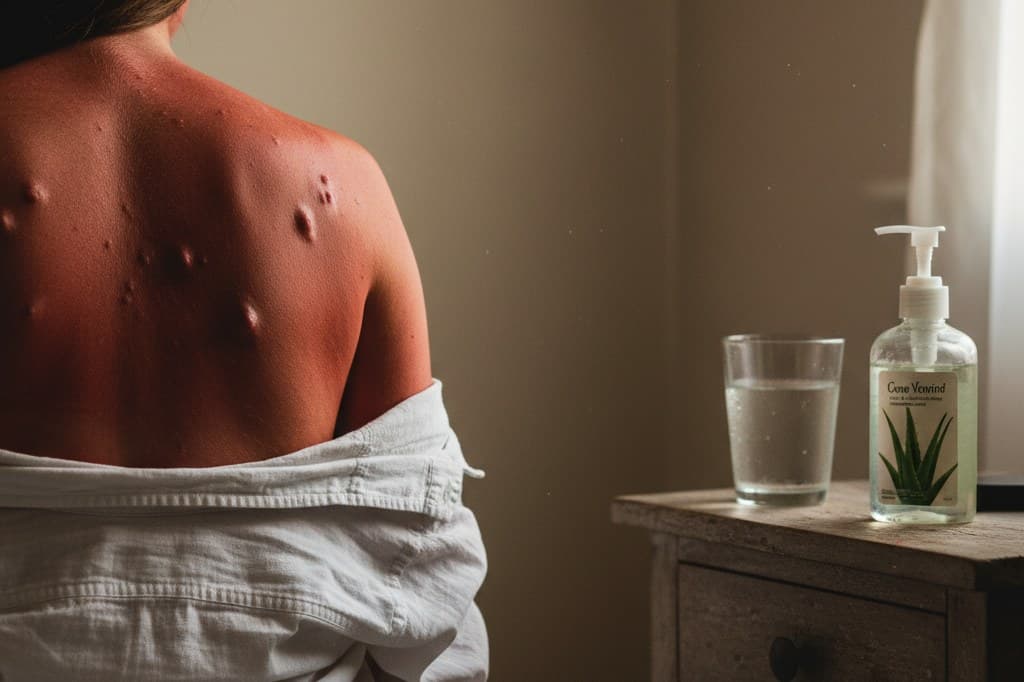

What Is Sun Poisoning?
Sun poisoning is a severe sunburn that goes beyond your skin. It's not a formal medical diagnosis, but it's the term doctors and patients use when UV overexposure triggers a full-body reaction: fever, chills, nausea, blistering, and dehydration on top of the burn itself. Cleveland Clinic describes it as a severe sunburn that can look a lot like an allergic reaction.
Think of a regular sunburn as your skin's surface-level alarm. Sun poisoning is when the alarm goes off across your entire system.
Here's what separates the two:
| Sunburn | Sun Poisoning | |
|---|---|---|
| What it affects | Skin only | Skin + whole body |
| Key signs | Redness, tenderness, warmth | Blisters, fever, chills, nausea, headache |
| Onset | Within hours of exposure | Within hours, can worsen over the next day |
| Duration | Several days | Systemic symptoms ease in days; skin healing can take a few weeks |
| Treatment | Aloe, hydration, OTC pain relief | Same base care + possible medical intervention |
| When to worry | Rarely | When fever, confusion, or widespread blistering appears |
The mechanism is straightforward: too much UV radiation damages skin cells at a scale your body can't handle locally. The damaged cells release inflammatory signals that spill into your bloodstream, and your immune system mounts a response that looks a lot like an allergic reaction or a mild flu.
That's why you feel sick — not just sore.
Sun Poisoning Symptoms
Sun poisoning symptoms fall into two groups: what happens to your skin and what happens to the rest of you.
Skin symptoms:
- Intense redness that spreads beyond exposed areas
- Swelling, sometimes severe enough to feel tight
- Blisters — ranging from small fluid-filled bumps to large, painful sacs
- Skin that feels hot to the touch hours after you've come inside
- Peeling that starts days later and can last for weeks
Systemic symptoms:
- Fever and chills (your body treating the burn like an infection)
- Nausea, sometimes vomiting
- Headache — often throbbing, made worse by dehydration
- Dizziness or lightheadedness when standing
- Fatigue that goes beyond "tired from the sun"
- Shortness of breath or fainting
- Confusion in severe cases
Dehydration drives a lot of the headache and dizziness. The American Academy of Dermatology points out that a sunburn draws fluid to the skin's surface and away from the rest of the body. That's why drinking water is not optional once sun poisoning sets in.
Symptoms often get worse over the first day. If they're still getting worse after that, or if you can't keep fluids down, it's time to see someone.
Sun Poisoning vs. Sunburn: How to Tell the Difference
The simplest way to tell sun poisoning from a sunburn is whether you feel sick beyond your skin.
A sunburn hurts where you got burned. Sun poisoning makes your whole body feel wrong.
Here's the litmus test. A sunburn:
- Red, warm skin that hurts to touch
- Maybe some peeling a few days later
- You feel fine otherwise — tired maybe, but not ill
Sun poisoning:
- All of the above, plus...
- You feel feverish. Chills, even in a warm room.
- Nauseous. Maybe throwing up.
- Head pounding. Lightheaded when you stand.
- Confused or foggy.
- Blisters forming, sometimes across a large area.
If you check three or more of those systemic symptoms, you're past the "just a bad sunburn" stage. Treat it seriously.
One thing people get wrong: sun poisoning is not the same as sun allergy (polymorphous light eruption, or PMLE). PMLE is an immune reaction where even small amounts of sun trigger a rash — it's an allergy. Sun poisoning is dose-dependent: anyone can get it if they get enough UV in one go. For more on that distinction, see the sun rash and sun allergy guide.
How to Treat Sun Poisoning
Sun poisoning treatment has two goals: cool the damage and support your body while it repairs.
Step 1: Get Out of the Sun
This sounds obvious, but the instinct to "tough it out" is strong. If you feel symptoms coming on — headache, nausea, skin burning — get inside or into deep shade immediately. More UV exposure will compound the damage.
Step 2: Cool Down, Don't Shock
A cool shower or bath. The American Academy of Dermatology recommends frequent cool baths or showers to relieve sunburn pain. Skip ice. Aim for cool-but-comfortable, then pat the skin dry.
Cool compresses work too — a damp cloth on the worst areas, swapped out every 15 minutes.
Step 3: Hydrate Aggressively
This is the most overlooked piece. A bad burn pulls fluid toward damaged skin, and you lose hydration fast.
Drink water with electrolytes — sports drinks, oral rehydration solution, or water with a pinch of salt and sugar. Skip alcohol and caffeine; they make dehydration worse.
Keep drinking steadily through the first couple of days, not just when you feel thirsty.
Step 4: Pain and Inflammation
The American Academy of Dermatology suggests aspirin or ibuprofen to reduce swelling and discomfort. Take as directed on the label, and check with a pharmacist if you have other conditions or take other medications.
Step 5: Protect the Skin
- Aloe vera gel — straight from the plant if you have it, or a fragrance-free gel. Avoid products with alcohol (they sting and dry).
- Moisturizer — fragrance-free, applied gently. Don't rub burned skin.
- Do NOT pop blisters. Blisters are sterile fluid protecting new skin underneath. Breaking them invites infection and slows healing.
- Keep blisters clean. The AAD suggests petroleum jelly to protect blisters while they heal. If one breaks on its own, wash gently with mild soap and water and cover it loosely with gauze.
Step 6: Cover Up Completely
If you have to go outside, cover every inch of burned skin. Loose cotton clothing. A UPF 50+ wide-brim hat protects your face, ears, and neck — areas that burn fast and hurt the most. See our SPF vs. UPF guide for why fabric protection and sunscreen work differently.
What Not to Do
- Don't put ice directly on burned skin
- Don't apply butter or kitchen oils to the burn
- Don't use numbing creams like benzocaine on broken or blistered skin without asking a pharmacist or doctor first
- Don't peel flaking skin — let it shed naturally
For a full step-by-step on treating less severe burns, the how-to-treat-sunburn guide covers the basics in more detail.
When to See a Doctor
Most cases of sun poisoning resolve with home care, but some need a doctor. Mayo Clinic advises seeing a health care provider for large blisters, blisters on the face, hands or genitals, severe swelling, or worsening pain, headache, nausea, fever or chills. Go to urgent care or the ER if:
- Fever over 103°F (39.4°C) with vomiting
- Confusion, fainting, or feeling faint, or cold, clammy skin with dizziness
- Signs of infection: pus, oozing, or red streaks spreading from blisters
- Dehydration, especially if you can't keep fluids down
According to Cleveland Clinic, medical treatment for sun poisoning can include IV fluids for dehydration, steroid creams or oral steroids, prescription pain medication, and topical antibiotics if blisters become infected.
For more on how long recovery takes at different severity levels, see the how-long-does-sunburn-last guide.
What Causes Sun Poisoning (and Who's at Risk)
Sun poisoning happens when UV exposure overwhelms your skin's defenses, and that threshold varies a lot from person to person. It doesn't take a full day at the beach.
You're at higher risk if you:
- Have fair skin, blue or green eyes, and red or blonde hair (Fitzpatrick types I-II — see the Fitzpatrick skin type guide)
- Are at high altitude (UV levels rise about 10% with every 1,000 m of altitude, according to the World Health Organization)
- Are near water, sand, or snow (all reflect UV back at you; WHO says fresh snow almost doubles your UV exposure)
- Take medications that increase sun sensitivity: certain antibiotics (doxycycline, tetracycline), acne medications (isotretinoin), some antidepressants, diuretics, and even some OTC pain relievers
- Have lupus or other autoimmune conditions
- Stay out for hours without reapplying sunscreen
But here's the thing: anyone can get sun poisoning. Melanin offers some protection, but it's partial, not immunity. People with darker skin can and do get severe burns, especially at the beach, on the water, or at altitude where UV hits harder than expected.
The real danger is exposure time. Most cases happen when someone stays outside for hours in strong UV without realizing how much damage is accumulating. They don't feel hot because there's a breeze, or they're in and out of water, or it's partly cloudy. Sound familiar? That's why cloudy-day burns catch so many people off guard. SunUp flags high-UV days that feel cool, the exact setup behind most sun poisoning cases, before you head out.
Preventing Sun Poisoning
You can prevent sun poisoning with sunscreen, UV-protective clothing, and a UV check before you head out. Doing it consistently is the hard part.
Sunscreen, applied correctly. The American Academy of Dermatology recommends broad-spectrum, water-resistant SPF 30 or higher, about 1 ounce (a shot glass) to cover exposed skin, reapplied every two hours and right after swimming or sweating. The complete sunscreen guide covers the techniques that actually work.
Check the UV index, not the temperature. The UV index tells you how strong the sun's burning rays are. Temperature tells you nothing about UV. SunUp's 8-day UV forecast lets you plan a beach day, hike, or game around the hours most likely to cause sun poisoning. A cool, breezy day with UV 8 is far more dangerous than a hot day with UV 3. The UV index burn time chart shows you exactly how fast the window closes as UV climbs.
Wear UV-protective clothing. A UPF 50+ hat with a real brim, like the GearTOP Navigator, blocks 98% of UV at the fabric level, according to the Skin Cancer Foundation's explanation of UPF 50. No reapplication, no missed spots, no sun poisoning surprise. Combine it with long sleeves and sunglasses for near-complete coverage.
Use an app that calculates your risk. SunUp helps prevent sun poisoning by turning the UV index into a personal number. The SunUp app (free on iOS) shows the real-time UV index where you are, an 8-day UV forecast, and a burn-time estimate built from your skin type, age, and location, and it lets you check UV for family members in other cities. Burn time isn't one fixed number; it changes with who you are and where you're standing, including reflection off water, sand, or snow. "UV index 9" is abstract. A burn-time estimate for you, right now, is something you can act on.
Hydrate before, during, and after. Dehydration makes everything worse — it accelerates the systemic symptoms that separate a bad sunburn from sun poisoning.
If you're on sun-sensitizing medications, ask your doctor or pharmacist how much extra protection you need.
FAQ
What is sun poisoning?
Sun poisoning is not a formal medical diagnosis. It's the everyday name for a severe sunburn that causes symptoms beyond the skin. Cleveland Clinic describes it as a severe sunburn that can look like an allergic reaction. Along with redness, pain, and blistering, you may get fever, chills, nausea, headache, dizziness, and dehydration. The cause is too much UV exposure, not an allergy.
What's the difference between sunburn and sun poisoning?
A regular sunburn stays on your skin: redness, tenderness, maybe peeling. Sun poisoning goes systemic, adding fever, chills, nausea, headache, dizziness, and sometimes blistering across large areas. Think of sunburn as a skin-level injury and sun poisoning as a whole-body reaction to severe UV damage. If you feel sick, not just sore, treat it as sun poisoning.
What are the symptoms of sun poisoning?
Sun poisoning symptoms include severe redness and pain, blistering or peeling skin, swelling, headache, fever and chills, nausea, dizziness or lightheadedness, dehydration, confusion, and in some cases fainting or shortness of breath, according to Cleveland Clinic. Symptoms usually start within hours of too much UV exposure and can get worse over the following day before they ease.
How long does sun poisoning last?
The worst sun poisoning symptoms, like fever, nausea, and pain, usually ease over a few days with good home care. Healing takes longer: Cleveland Clinic notes that pain and skin healing can continue for a few weeks, depending on how severe the burn is. Peeling and sensitive skin often linger after you feel well again, so keep the area covered and out of the sun.
When should you see a doctor for sun poisoning?
See a doctor for sun poisoning if you develop large blisters, blisters on the face, hands or genitals, severe swelling, signs of infection such as pus or red streaks, or worsening pain, headache, nausea, fever or chills. Mayo Clinic advises immediate care for a fever over 103°F (39.4°C) with vomiting, confusion, dehydration, or cold skin, dizziness or faintness.
How do you treat sun poisoning at home?
To treat sun poisoning at home, get out of the sun right away and cool the skin with a cool shower, bath, or damp compress. Take ibuprofen or aspirin for pain and swelling, and drink extra water, ideally with electrolytes. Apply aloe vera or a gentle moisturizer. Don't pop blisters, because they protect the healing skin underneath. Cover up completely before going back outside.
Can you get sun poisoning on a cloudy day?
Yes, you can get sun poisoning on a cloudy day. The World Health Organization's Global Solar UV Index guide says up to 80% of solar UV radiation can penetrate light cloud cover. A cool, overcast day removes the heat that warns you to get out of the sun, so people stay out for hours without protection and end up with a severe burn.
How can you prevent sun poisoning?
Prevent sun poisoning with broad-spectrum SPF 30+ sunscreen, reapplied every two hours and after swimming or sweating, plus a UPF 50+ wide-brimmed hat and long sleeves. Seek shade when UV peaks around midday. Check the UV index before you go: the SunUp app shows real-time UV, an 8-day forecast, and a burn-time estimate personal to your skin type, age, and location.
The Bottom Line on Sun Poisoning
Sun poisoning is preventable, and SunUp makes the daily UV check take seconds. You don't need to fear the sun to respect it. Know your personal burn time, dress for the UV index, not the temperature, and keep the SunUp app on your home screen so sun poisoning never catches your family off guard. If sun poisoning does hit, treat it seriously: hydrate, cool down, protect the skin, and see a doctor if things get worse instead of better.
For more: complete sunscreen guide · UV index burn time chart · how sunburn heals (and how long it takes) · step-by-step sunburn treatment · sun rash vs. sun allergy
Apply This Knowledge With SunUp
Get real-time UV data personalized for your skin type, location, and activity.
Download Free — iOS