
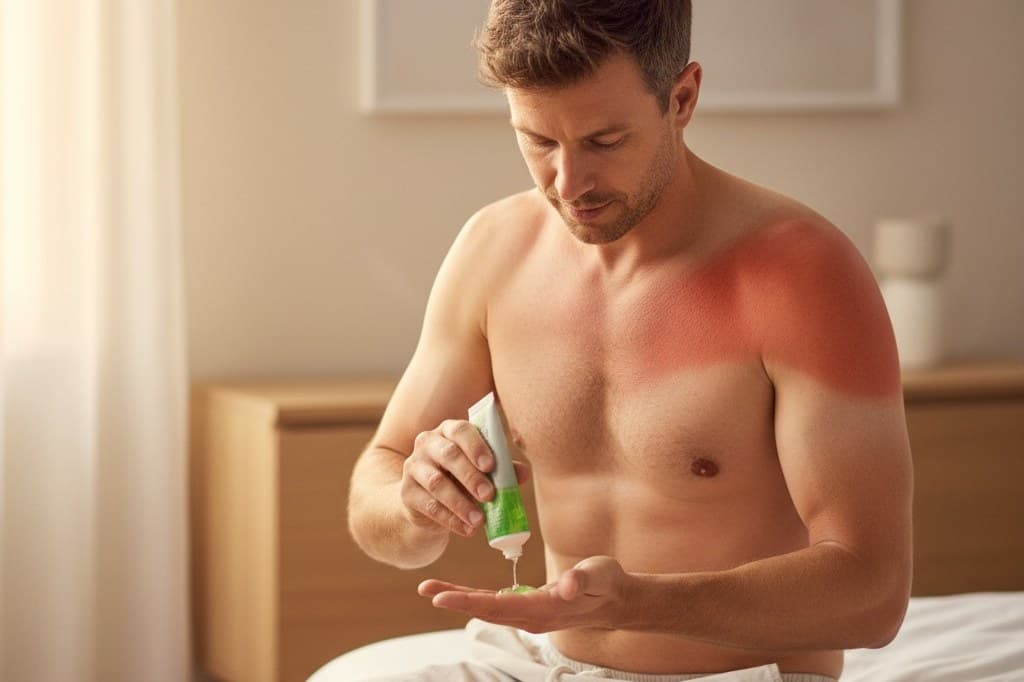

Quick Answer: A mild sunburn (first-degree) lasts 3 to 5 days. A moderate burn heals in about a week. If you've got blisters (second-degree), you're looking at 7 to 14 days — sometimes longer. The pain peaks around 24 hours after exposure, which means tomorrow might actually feel worse than today.
But the timeline isn't the whole story. Every sunburn causes permanent DNA damage to your skin cells. The pain fades. The peel finishes. The damage stays.
Here's what's actually happening to your skin right now, what to expect over the next few days, and what you can do to feel better faster — backed by dermatologists, not Pinterest.
The Sunburn Timeline: Hour by Hour, Day by Day
The sunburn healing timeline: damage begins hours before you feel it, pain peaks around 24 hours, blisters (if any) show by day 2-3, peeling runs day 3-7, and full recovery follows by day 7 for mild burns or 7-14+ days for blistered second-degree burns.
Hours 1–6: It Starts Quietly
You probably won't feel much right away. Sunburn isn't like a thermal burn — it doesn't hurt the instant it happens. The UV radiation is busy damaging the DNA in your skin cells. Your body hasn't mounted its inflammatory response yet.
This is when people make the mistake of staying outside longer. "I don't feel burned." Yeah. Not yet.
Hours 6–24: The Pain Shows Up
Redness and warmth start rolling in. Your blood vessels dilate. Immune cells rush to the damaged skin. This is inflammation — the same process that happens with any injury, just slower.
By roughly 24 hours post-exposure, the pain and redness peak. If you burned yourself in the afternoon, expect to feel it worst the following afternoon.
You might also feel fatigued, headachy, or a little nauseous. That's not just dramatic — your body is mounting a systemic response to the damage.
Day 2–3: The Redness Holds, Blisters May Appear
For a first-degree burn, redness keeps going but pain starts to ease. Your skin feels hot and tight.
For a second-degree burn, this is when blisters show up. They're filled with fluid and mean you've damaged deeper layers of skin. Do not pop them. The fluid is protecting new skin forming underneath.
Day 3–7: Peeling Begins
Peeling usually starts around day 3 or 4. It can continue through day 10. Different parts of the burn may peel at different times — one shoulder might shed before the other.
Peeling means your body is discarding cells too damaged to repair. It's ugly and annoying, but it's a sign the healing process is working. Scrubbing or peeling it off manually will just set you back.
Day 7 and Beyond: Full Recovery
First-degree burns: most people feel back to normal by day 5-7, with some lingering dryness or uneven tone for another week or so.
Second-degree burns: healing takes 7 to 14 days minimum. The blistered areas heal last. Skin may stay sensitive or discoloured for weeks after.
First-Degree vs. Second-Degree: Knowing What You're Dealing With
| First-Degree | Second-Degree | |
|---|---|---|
| What's damaged | Outer skin layer (epidermis) | Deeper layer (dermis) |
| How it looks | Red, dry, maybe swollen | Blisters, wet-looking patches, white discolouration within the red |
| How it feels | Hot, tender, tight | More intense pain, larger swelling |
| Healing time | 3–7 days | 7–14+ days |
| Can I treat at home? | Yes | Usually, unless infected or covering a very large area |
When to see a doctor: If you've got a fever, chills, nausea, pus from blisters, or the burn covers a large portion of your body, get medical attention. These signs can indicate infection or heat illness, not just a bad burn.
Third-degree sunburns exist but are extremely rare from sun exposure alone — they're more common with fire or chemical burns. If skin looks leathery, white, or numb, that's an emergency.
How to Treat a Sunburn: What Dermatologists Actually Recommend
The American Academy of Dermatology has a clear protocol. No coconut oil, no weird TikTok hacks, no "just tough it out." Here's what works:
1. Get inside. Now.
Every minute of additional sun exposure is adding to the DNA damage. The first thing you do — before aloe, before anything — is get out of the sun.
2. Cool the skin.
Take cool (not ice-cold) baths or showers. Cold water is fine for a quick rinse but don't shock already-damaged skin. Pat dry — don't rub.
3. Moisturize while skin is still damp.
This is when your skin absorbs best. Aloe vera gel and soy-based moisturizers are the AAD's top recommendations. Calamine lotion works too if you've got itching. Reapply whenever the discomfort comes back — you can't really overdo this part.
4. Take an NSAID.
Ibuprofen or aspirin reduces swelling and takes the edge off the pain. Follow the label instructions — this is about inflammation control, not just pain relief.
5. Drink way more water than you think you need.
Sunburn draws fluid to the skin's surface, which can leave you dehydrated systemically. If you're thirsty, you're already behind.
6. Leave blisters alone.
Blisters are sterile fluid protecting new skin. Popping them opens a door for infection. If one breaks on its own, clean it gently, apply antibiotic ointment, and cover loosely.
What NOT to Do
- Don't put ice directly on burned skin. It can cause more tissue damage on already-compromised skin.
- Don't use petroleum jelly in the first 24–48 hours. It traps heat. After the burning sensation stops, it's great for sealing in moisture.
- Don't use "-caine" sprays (lidocaine, benzocaine) on large areas. They can be absorbed through broken skin and cause unexpected side effects. For small spots only.
- Don't scrub the peeling. Let skin shed naturally. Scrubbing removes new, fragile skin underneath.
- Don't "tough it out" without water and rest. Sunburn is an inflammatory injury. Your body needs recovery resources just like it would for any other wound.
After the Burn Heals: Why the Next One Matters More
Here's the uncomfortable truth from the Cleveland Clinic: "Multiple sunburns can lead to premature skin aging and skin cancer." Not "might." "Can."
Each sunburn is a roll of the dice on DNA mutations that don't get repaired. The peeling? Those are cells your body decided were too damaged to save. But others with DNA mutations can survive — and accumulate over time.
An AAD survey found 36% of Americans got sunburned in 2023 — up from the previous year. Only about 1 in 3 people use sunscreen. Even fewer reapply every two hours like you're supposed to.
None of this is to guilt you. Sunburn happens. But the single most useful thing you can do with the experience is make sure it happens less often.
That's the whole reason we built SunUp. It's a free iOS app that tells you your personal safe-sun window based on your skin type, the UV index at your exact location, and what you're doing. Not a generic "UV is high today" alert — an actual number: "You've got roughly 38 minutes before burning starts." That changes everything about how you plan outdoor time, especially for kids.
Clothing helps too. A wide-brimmed sun hat (look for UPF 50+, not just any hat) blocks UV that sunscreen misses — your ears, the back of your neck, your scalp. We wrote more about the difference between SPF and UPF here and how to actually use sunscreen correctly here.
None of this changes the fact that "healthy tan" isn't a real thing — there's no such thing as a safe tan, and the same DNA-damage math applies whether or not the burn ever shows. If you're trying to figure out your own risk before you're outside rather than after, the UV index burn-time chart and Fitzpatrick skin type guide are the starting point.
FAQ: Sunburn Recovery Questions, Answered
How long does sunburn redness last?
Redness from a first-degree burn typically fades over 3 to 5 days. Second-degree burns stay red longer — a week or more — especially around blistered areas. The redness is your blood vessels responding to inflammation; it goes down as the inflammation resolves.
Does a sunburn get worse overnight?
Yes. Pain and redness typically peak around 24 hours after exposure. If you burn yourself in the afternoon, the next day will often feel worse. This delay is why people underestimate damage while they're still outside.
How long does it take for sunburn peeling to stop?
Peeling generally starts around day 3 or 4 and can continue through day 7 to 10. It wraps up when all the damaged cells have been shed. Moisturizing helps reduce how much peeling is visible, but it doesn't stop the shedding process — that has to happen.
Can I speed up sunburn healing?
You can't make the DNA damage heal faster, but you can make yourself more comfortable while it runs its course. Cool compresses, aloe vera, ibuprofen, and staying hydrated are the dermatologist-backed approach. There's no overnight fix — anyone selling one is lying.
Should I put sunscreen on a sunburn?
No. Sunscreen is for prevention, not treatment. It won't help burned skin heal and may irritate it further. Cover burned areas with clothing or stay in the shade until the skin barrier has recovered.
How long before sunburn turns into a tan?
The tan you get after a sunburn is not a healthy tan — it's visual evidence that DNA damage has already occurred. The colour develops as melanin production ramps up in response to injury. It may appear as the redness fades, usually after 3–5 days, but it's a scar response, not a "safe" base tan. There is no safe tan.
Can a sunburn make you feel sick?
Yes. Severe sunburn can cause systemic symptoms — fatigue, headache, nausea, even low-grade fever. This is sometimes called "sun poisoning" (though it's not actual poisoning). It happens because your body mounts a whole-body inflammatory response. If symptoms are severe or include confusion, dizziness, or high fever, see a doctor.
When can I go back in the sun after a sunburn?
Wait until the skin is fully healed — no redness, no peeling, no tenderness. Going back out before that compounds the damage. And when you do go back out, wear UPF-rated clothing, a hat, and broad-spectrum SPF 30+ sunscreen. Or better yet, check the SunUp app to see when your personal safe-sun window opens.
The Bottom Line
A mild sunburn runs its course in 3 to 7 days. A bad one takes up to two weeks. The pain peaks at 24 hours. The peeling is your body doing its job — let it.
But the damage to your DNA? That doesn't peel away. Every sunburn stacks the deck a little more toward long-term skin damage.
You can't undo this one. You can make the next one less likely. SunUp tells you exactly how long you can stay outside safely before burning — personalized to your skin, your location, and what you're doing. It's free. Download it here.
And if you spend a lot of time outside — fishing, hiking, gardening, coaching your kid's soccer team — a UPF 50+ hat is one of the simplest, most reliable forms of sun protection. Browse GearTOP sun hats here.
Apply This Knowledge With SunUp
Get real-time UV data personalized for your skin type, location, and activity.
Download Free — iOS