

Yes, Here's Exactly How to Treat It
Take ibuprofen. Cool the skin. Apply aloe vera while damp. Drink water. Leave blisters alone. That's the five-step protocol dermatologists agree on, and the faster you start it, the less painful your sunburn will be.
Start treatment the moment you notice your skin turning pink — not hours later when the sting has fully set in. Sunburn is inflammatory damage to your skin's DNA. The redness and heat you feel are your blood vessels dilating to rush immune cells to the site. The right steps in the first 30 minutes can meaningfully reduce both pain and peeling.
And once you have handled the immediate burn, there is something more useful than any treatment: making sure you never need to search "how to treat sunburn" again.
The First 30 Minutes: What to Do Immediately
You notice pink skin. Maybe your shoulders feel hot. Here is what to do, in order:
-
Get out of the sun. Right now. Not after this chapter or when you finish your drink. UV damage continues as long as you are exposed. Go indoors. If you cannot get inside, get under dense shade and cover up with clothing.
-
Take ibuprofen. A non-prescription NSAID like ibuprofen (Advil, Motrin) or naproxen (Aleve) taken at the first sign of sunburn reduces inflammation at the source. Do not wait until the pain is unbearable. Aspirin works too if it is what you have. Acetaminophen (Tylenol) helps with pain but not inflammation — it is a second choice.
-
Cool the skin. A cool bath or shower — not ice cold — for 10–15 minutes. Or dampen a clean towel with cool tap water and lay it over the burned area. Repeat every few hours. If you are near a body of water, a 30-second dip helps, but get right back out of the sun.
-
Start drinking water. Sunburn draws fluid from the rest of your body to the skin's surface. Dehydration can hit before you feel thirsty. Water or an electrolyte drink — now, not later.
The first 30 minutes set the ceiling on how bad this burn will get. You cannot reverse the DNA damage, but you can limit the inflammatory cascade.
How to Treat Sunburn at Home: The Full Protocol
Once you have done the immediate steps, here is the complete home treatment plan.
Cool the Skin — Repeatedly
Cool compresses and cool baths remain your best tool for the first 24 hours. Frequency matters more than duration: 10 minutes, several times a day, beats one long soak. Adding about 60 grams (2 ounces) of baking soda to a cool bath helps soothe widespread burning. Colloidal oatmeal baths work well too — the kind sold for eczema.
Do not use soap on sunburned skin for the first day or two. It strips what little moisture remains.
Moisturize While Damp
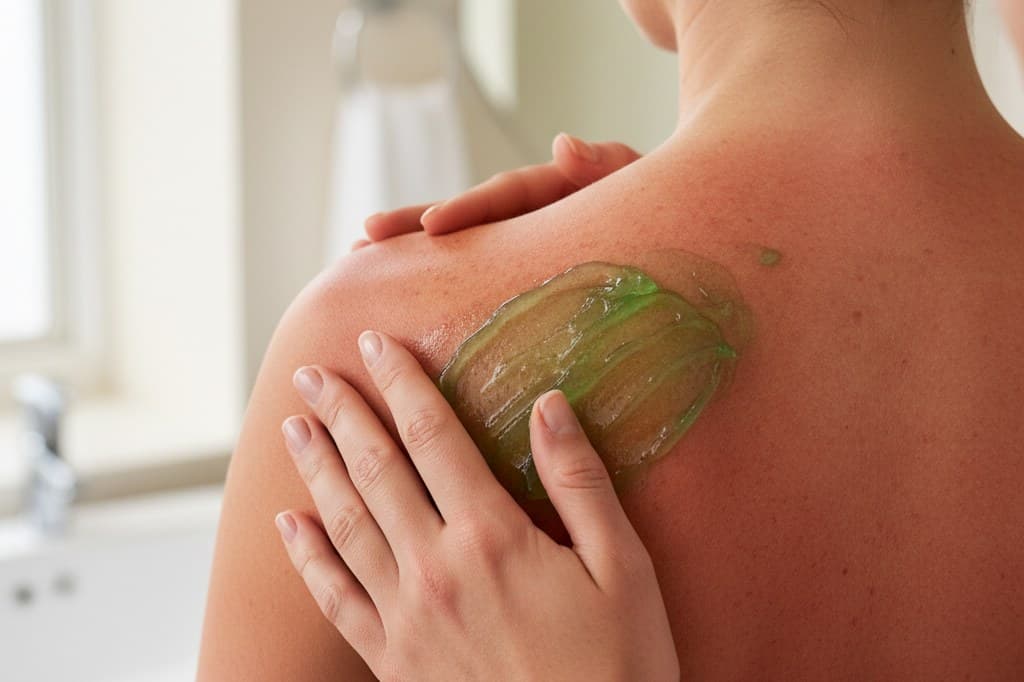
This is the step most people skip and it matters enormously. Apply moisturizer while your skin is still slightly damp from a cool bath or compress — it locks in water that would otherwise evaporate.
What to use:
- Aloe vera gel (keep it in the fridge — the cooling doubles the relief)
- Soy-based moisturizer
- Calamine lotion for especially tender spots
- A light, fragrance-free lotion with no alcohol, no petroleum, and no oil
What to avoid on fresh sunburn:
- Heavy petroleum jelly or oil-based ointments (they trap heat)
- Products containing alcohol (they dry and sting)
- "-caine" products like benzocaine or lidocaine unless prescribed (they can cause allergic reactions on damaged skin)
- Fragranced lotions
Reapply moisturizer whenever your skin feels dry or tight. For the first 48 hours, that might be every couple of hours.
Take Anti-Inflammatories on Schedule
Ibuprofen works best when you stay ahead of the pain rather than chasing it. For the first 24–36 hours, take it on a regular schedule. The anti-inflammatory effect is as important as the pain relief — it reduces the swelling and redness at the tissue level.
Over-the-counter 1% hydrocortisone cream, applied thinly once or twice a day, can reduce redness and swelling on especially angry areas. Do not use it on open blisters.
Hydrate From the Inside
Sunburn makes you lose fluid faster than you realize. A first-degree sunburn over a large area — say, your full back and shoulders — can measurably increase your fluid requirements for the next 48 hours. Water is fine. An electrolyte drink is better, especially if you feel headachey or tired. Skip alcohol entirely — it dehydrates you and dilates blood vessels, making the burn feel worse.
Leave Blisters Alone
Blisters mean you have a second-degree sunburn — the damage has reached the dermis. The fluid inside those blisters is your body's own wound dressing: sterile, protective, and exactly where it should be.
Do not pop them. Do not peel the skin. If a blister breaks on its own, trim the dead skin with clean scissors, wash gently with mild soap and water, apply antibiotic ointment, and cover with a non-stick bandage.
Blisters that cover more than 20% of your body — think your entire back, or both legs — mean you should see a doctor.
What NOT to Do
Some of the most common sunburn advice is wrong. Here is what to skip:
Do not apply ice directly. It can cause vasoconstriction severe enough to damage already-burned tissue. Cool water, not ice.
Do not put butter, oil, or coconut oil on fresh sunburn. They trap heat. Your skin needs to release heat to heal. Save the oils for after the burn has cooled — days 3 or 4, when peeling begins.
Do not use exfoliating products or scrubs. Your skin is already shedding damaged cells. You do not need to help it along. Exfoliating sunburned skin can cause scarring.
Do not pop blisters. Covered above but worth repeating. That blister fluid is sterile. Open it to the air and you open a door to infection.
Do not go back in the sun. Even with sunscreen. Burned skin needs complete UV avoidance until healed — wear UPF-rated clothing if you must be outside.
Do not trust the "base tan" myth. A tan after a burn is not protection. It is evidence of injury.
How Long Does It Take to Heal?
Healing time depends on severity:
| Severity | What It Looks Like | Healing Time | What To Expect |
|---|---|---|---|
| Mild first-degree | Pink, tender, no blisters | 3–5 days | Peeling starts day 3–4. Skin fully healed in about a week. |
| Moderate first-degree | Bright red, swollen, hot | 5–7 days | Pain peaks at ~24 hours. Peeling may be heavy. |
| Second-degree | Blisters, extreme redness, wet-looking skin | 1–3 weeks | Blisters dry and heal over 1–2 weeks. New skin underneath may be pink for weeks longer. |
Fitzpatrick skin types IV–VI (darker skin tones) may not show visible redness but can sustain the same level of cellular damage. The skin still feels hot, tight, and tender — the healing timeline is the same even if the visible signs are subtler.
The peeling phase? That is your body discarding cells with DNA damage too severe to repair. Let it happen naturally. It is not satellite evidence that the burn was "bad" — it is the standard cleanup process.
When to See a Doctor
Most sunburns heal at home. Here is when to get medical help:
- Blisters covering more than 20% of your body — roughly one full leg, your entire back, or both arms
- Fever above 102°F (39°C) or chills
- Signs of infection — red streaks extending from the burn, pus, increasing pain after day 3
- Severe dehydration symptoms — dizziness, confusion, barely urinating, dry mouth
- Any sunburn in a baby under 1 year old — this is a medical emergency. Call your doctor immediately.
- Heat illness signs — nausea, rapid breathing, muscle cramps, confusion, fainting
A third-degree sunburn (leathery, numb, white or charred-looking skin) from the sun is extremely rare but requires emergency care.
Sunburn in Kids and Babies: Different Rules
Children's skin is thinner and burns faster than adult skin. The treatment protocol is mostly the same, with two important exceptions:
Babies under 6 months: Should never be in direct sun. If a baby under 6 months gets sunburned, call your pediatrician — do not treat at home.
Babies 6–12 months: Sunburn is still an emergency. Call your doctor. Give them water or milk to prevent dehydration while you wait for guidance.
Children over 1 year: Follow the same cool, moisturize, hydrate protocol as adults — but skip hydrocortisone and any "-caine" products unless your pediatrician OKs them. Calamine lotion (plain, without antihistamine additives) is generally safe. Call your doctor if the child has blisters, a fever, or seems unusually tired or irritable.
And then: sunscreen every single time they go outside. Childhood sunburns — especially blistering ones — are strongly linked to skin cancer later in life. Five or more sunburns across a lifetime more than doubles melanoma risk (Skin Cancer Foundation).
From Treatment to Prevention: Do Not Search This Again
Every sunburn is permanent DNA damage. You can treat the symptoms, but you cannot undo the injury. That makes prevention not just a nice-to-have — it is the only approach that actually protects your skin.
Two things make prevention practical instead of aspirational:
Know Your Personal Burn Time
"Wear sunscreen" is good advice. "You have 22 minutes before you burn today" is actionable advice. The difference is the UV index — a number from 1 to 11+ that tells you how strong the sun's rays are at your exact location, right now.
A UV index of 3? Fair skin can burn in about 45 minutes. UV index of 8? That same person burns in under 15 minutes. Cloud cover? Up to 80% of UV still gets through. Altitude? UV increases roughly 4% per 1,000 feet.
The SunUp app gives you real-time UV index, a personalized burn timer based on your skin type and location, and reapply-sunscreen reminders. Knowing your number takes sun protection from a vague intention to a specific action.
Wear the Right Protection
Sunscreen alone is not enough. It wears off. It misses spots. The Skin Cancer Foundation and the American Academy of Dermatology both put protective clothing first in their prevention hierarchy: shade, then UPF clothing, then sunscreen for what is still exposed.
A UPF 50+ wide-brim hat shades your face, ears, and neck — the three most common skin cancer sites. Long sleeves and UV-blocking sunglasses cover the rest. GearTOP's UPF 50+ sun hats are built specifically for all-day outdoor exposure: hiking, gardening, fishing, or just a long walk.
The goal is not to live indoors. It is to know your number, dress for it, and never need to google "how to treat sunburn" again.
FAQ
What is the fastest way to heal a sunburn?
Cool the skin immediately with cool (not ice-cold) compresses or a cool bath, take ibuprofen within the first few hours to reduce inflammation, apply aloe vera or soy-based moisturizer while skin is still damp, and drink extra water to fight dehydration. There is no magic shortcut — sunburn is DNA damage, and healing takes 3–7 days for mild burns — but cooling + anti-inflammatory + hydration within the first 30 minutes makes the biggest difference in pain and recovery time.
Does aloe vera actually help sunburn?
Yes. Aloe vera has proven anti-inflammatory and wound-healing properties. Its polysaccharides and glycoproteins reduce redness and pain while keeping the skin moist — which is critical because sunburned skin loses water faster. Keep your aloe gel in the fridge for extra cooling relief.
Should I put ice on a sunburn?
No — never apply ice directly to sunburned skin. It constricts blood vessels too aggressively and can cause additional tissue damage on already-injured skin. Use cool (not ice-cold) water compresses or a cool bath instead.
How long does sunburn take to heal?
First-degree sunburn (redness, no blisters): pain peaks at ~24 hours, peeling starts at 3–4 days, skin heals in about a week. Second-degree sunburn (blisters): can take 2–3 weeks to fully heal. Darker skin tones may not show visible redness but can still have significant damage — healing time is similar.
Can you put sunscreen on a sunburn?
You can — but you should not be outside at all with active sunburn. Sunscreen on broken, burned skin can sting and trap heat. Stay inside or fully covered until the burn heals. If you must go out, wear loose UPF-rated clothing and stay in shade rather than relying on sunscreen over damaged skin.
When should you see a doctor for sunburn?
Seek medical attention if you have blisters covering more than 20% of your body, a fever over 102°F (39°C), signs of infection (red streaks, pus), severe pain that ibuprofen does not touch, or confusion/dizziness. Any sunburn in a baby under 1 year old is a medical emergency — call your doctor immediately.
Does a sunburn turn into a tan?
Not in a healthy way. A tan after a sunburn is the skin's damage response — melanocytes produce extra pigment to shield already-injured cells. There is no safe tan from UV exposure. The "burn then tan" cycle is cumulative DNA damage that directly raises your skin cancer risk.
What helps sunburn pain at night?
Take ibuprofen before bed (it lasts 4–6 hours), apply a refrigerated aloe gel or a thin layer of hydrocortisone cream, sleep in loose cotton clothing on cool sheets, and keep a glass of water at your bedside. An oatmeal bath before bed can also calm widespread burning.
Sources: American Academy of Dermatology (AAD), Skin Cancer Foundation, Cleveland Clinic, Mayo Clinic, WHO/ICNIRP UV guidance. This article provides general information — it is not medical advice. Consult a healthcare provider for severe sunburn or if you have specific health concerns.
Download SunUp — real-time UV index, personalized burn timer, and sunscreen reminders. Because the best sunburn treatment is not getting one.
Apply This Knowledge With SunUp
Get real-time UV data personalized for your skin type, location, and activity.
Download Free — iOS