
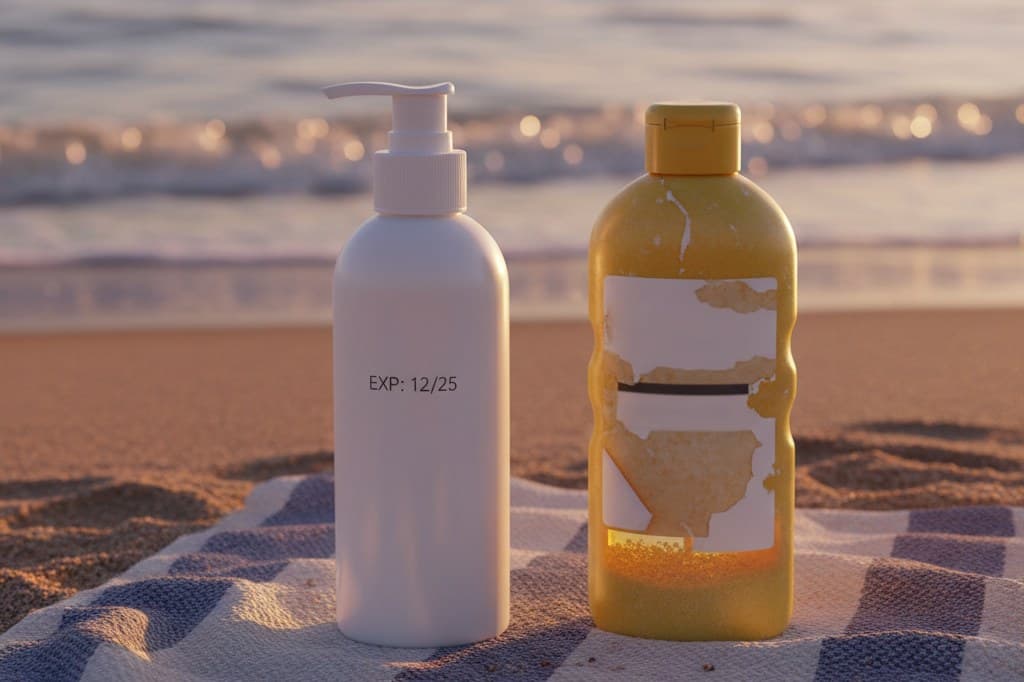

Yes — sunscreen expires. FDA guidance is clear: nonprescription sunscreens are expected to hold labeled strength for about three years under proper storage. No printed date? Treat the bottle as done three years after purchase.
That rule is a starting point, not a free pass for the bottle that lived in last July's hot trunk. Heat, humidity, and sunlight chew through actives faster than a bathroom drawer does. A sealed, cool-stored SPF 30 can still be solid; the same tube after a summer of beach-bag abuse may not be.
Quick Answer: Sunscreen expires. The FDA standard is roughly 3 years of full SPF when storage is clean. If the bottle baked in heat or sun — or looks separated, discolored, or grainy — replace it before you burn.
The FDA 3-Year Rule (And Why It's Just a Starting Point)
The FDA sunscreen consumer page explains the regulatory baseline: unless a product carries a shorter labeled expiration, manufacturers must support stability so strength holds for at least three years. Mayo Clinic matches that framing — full strength for about three years when storage is sane.
So a bottle bought in June 2025 with no date printed should still be OK through about June 2028 if it stayed cool, dry, and out of direct sun.
Most summer habits fail that test. Trunks hit oven temps. Beach bags sit in open sun. Steamy bathrooms cook emulsion chemistry over months.
Consumer Reports has retested stored lab samples from prior seasons and reported no performance drop when storage was controlled. Their lab is not the glove compartment of a Honda Civic in August. Lab stability proves the formula can last; it does not save a heat-damaged bottle.
How to Find the Expiration Date on Any Sunscreen Bottle
Not all sunscreens print the date in the same place. Here's where to look:
- Tube sunscreen: Check the crimped top — the flat sealed edge at the bottom of the tube. Many brands emboss the date here.
- Bottle or spray: Look at the bottom or back, often near the barcode.
- Jar or tub: Check the underside of the jar.
If the date is embossed (pressed into the plastic), it can be hard to read. Hold the bottle at an angle in good light. If it's printed in ink, check it hasn't rubbed off — sunscreen and sand are not kind to printed labels.
What If There's No Expiration Date?
Write the purchase date on the bottle with a permanent marker. Then follow the 3-year rule: discard three years after that date.
If you forgot to write it down and genuinely can't remember when you bought it? Buy a new bottle. A new tube of SPF 30 costs about as much as a coffee — and a sunburn is significantly less enjoyable.
The Physical Signs Your Sunscreen Is Done
Forget the expiration date for a moment. Your sunscreen will tell you it's bad if you know what to look for:
Signs for All Sunscreens
- Separation: The liquid has split into layers — thin watery liquid on top, thick paste on the bottom. Shaking doesn't fix it.
- Color change: White sunscreen turning yellow, brownish, or developing dark spots.
- Odd smell: Chemical, rancid, or "off" — not the usual faint sunscreen scent.
- Texture: Lumpy, grainy, or won't spread smoothly.
Chemical vs. Mineral Differences
Chemical sunscreens (avobenzone, oxybenzone, octinoxate): degrade faster. When they expire, they tend to turn yellow, watery, and fail to spread. Oxidized chemical sunscreen can sometimes cause contact dermatitis — a rash that looks like a blistering sunburn.
Mineral sunscreens (zinc oxide, titanium dioxide): more stable but not immune. They get gritty, develop small hard particles, and become nearly impossible to rub into skin. If your mineral sunscreen feels like wet sand, it's done.
If you see any of these signs, toss it. The expiration date doesn't matter at that point.
Storage Mistakes That Kill Sunscreen Early
The vast majority of sunscreen "early deaths" come from one of three storage mistakes:
1. The hot car. Interior temperatures reach 50–60°C on a summer day. Active sunscreen ingredients break down fast at those temperatures. Even one afternoon can significantly degrade protection.
2. The beach bag in direct sun. People set their bags down on the sand or pool deck, and the sunscreen inside cooks. Wrap your bottle in a towel or toss it in a cooler.
3. The steamy bathroom. Humidity plus heat from showers accelerates degradation. A bathroom cabinet is usually fine — but a shelf directly next to the shower is not.
Good storage: a cool, dry closet or drawer. If you're out for the day, keep sunscreen in the shade. Toss it in a cooler with your drinks. Wrap it in a towel. Basically: treat it like something that can spoil. Because it can.
What Actually Happens If You Use Expired Sunscreen
The sunscreen itself doesn't become toxic or dangerous. The risk is what it stops doing: protecting you.
When active ingredients degrade, SPF drops. A bottle labeled SPF 50 might effectively be SPF 10, or worse — essentially nothing. You apply it thinking you're protected, stay out longer than you should, and burn.
Sunburn isn't just painful in the moment. Each serious burn adds lifetime risk. Large epidemiology work commonly cited in skin-cancer education (including reporting that tracks back to peer-reviewed sunburn/melanoma analyses) found that five or more blistering sunburns between ages 15 and 20 was associated with roughly an 80% higher melanoma risk. The Skin Cancer Foundation also stresses that five or more sunburns more than doubles melanoma risk — same direction, slightly different digests of the research.
Saving $15 on a fresh bottle does not trade favorably against that curve.
How Often Should You Actually Replace Sunscreen?
If you're using sunscreen the way dermatologists recommend — generously, every day — a 4-ounce bottle lasts about two to four weeks. You're replacing it naturally through use.
If you're an occasional user (weekend beach trips, gardening, the odd hike), your bottle might sit for months. Here's a practical timeline:
- Under 12 months old, stored properly, no signs of spoilage: Probably fine.
- 1–2 years old, stored in a bathroom cabinet: Check for separation, smell, and texture. If it looks normal, it's likely OK but verify the expiration date.
- 2–3 years old: Check the expiration date. If within 3 years and stored properly, effectiveness should be close to original. But if it spent any time in heat or direct sun, replace it.
- Over 3 years or unknown age: Replace. No exceptions.
Bottom line: if you're heading into a high-UV day (UV index 6+) and you're not confident in your sunscreen's condition, buy a fresh bottle. The peace of mind is worth it.
How the SunUp App Helps You Track Sunscreen Timing
Expiration is half the story; reapplication timing is the other half. SunUp by GearTOP shows real-time local UV index and estimates personal burn time from skin type so you know when protection actually matters.
One catch: the countdown assumes the SPF on the bottle is still honest. Partially degraded sunscreen means real-world burn time is shorter than the app window. Fresh product + honest UV data beats an optimistic bottle from two summers ago.
Download SunUp free on iOS for UV tracking, personal burn-time estimates, and family mode. Pair it with physical cover that does not "expire" — GearTOP UPF 50+ sun hats for face, ears, and neck when UV is high.
FAQ
Does sunscreen expire?
Yes. Sunscreen expires. FDA-linked consumer guidance treats outdated nonprescription sunscreen as ineffective after about three years from purchase when no shorter date is printed, and manufacturers must support multi-year stability. Heat and sun can make a bottle fail sooner.
How long does sunscreen last?
Unopened, properly stored product is generally good for up to 3 years. Once opened, many brands suggest finishing within 12 months. If it sat in a hot car or beach bag in direct sun, assume degradation and replace it.
How do I check if my sunscreen is expired?
Find the printed or embossed date on the tube crimp, bottle bottom/back, or jar underside. No date? Marker the purchase day and toss at 3 years. Also throw out separation, color shift, odd smell, or grit that will not cream back in.
What happens if you use expired sunscreen?
The cream usually is not toxic. The failure mode is lost SPF — labeled 50 can behave like weak protection. You stay out longer with false confidence and burn. The expired lotion is not the main hazard; unprotected UV is.
Does mineral sunscreen expire faster than chemical?
Chemical filters (avobenzone and friends) typically show heat/light damage sooner — yellowing, watery split, poor spread. Mineral formulas (zinc oxide, titanium dioxide) often stay stabler longer but can turn gritty or clumpy. Either type can fail after heat abuse.
Can I use sunscreen from last summer?
Often yes — if it is still inside 3 years, stored cool/dry, and looks normal. If last summer meant a hot car or open deck bag, buy fresh. A new tube costs less than a weekend of peeling shoulders.
Should I replace sunscreen every year?
FDA does not force a one-year swap. Daily users empty bottles long before year one. Occasional users with a 2+ year bottle and fuzzy storage history should replace before a high-UV day rather than gamble.
More Sun Protection Guides
Apply This Knowledge With SunUp
Get real-time UV data personalized for your skin type, location, and activity.
Download Free — iOS