


Vitamin D from sun exposure is one of the most commonly misunderstood health topics. It's used as a reason to avoid sunscreen, to stay in the sun longer than necessary, and to feel virtuous about something that — when you look at the actual biology — requires far less UV exposure than most people think, and delivers zero additional benefit after a relatively short window.
Here's what the research actually shows: how long you need to be in the sun for meaningful vitamin D production, how that changes by skin type and season, and why staying longer doesn't help.
Quick Answer: Most people (Fitzpatrick Types II–III) need 10–20 minutes of arm and leg exposure at UV index 5–7 for meaningful vitamin D synthesis. Darker skin types need 30–60 minutes. After this window, staying in the sun produces no additional vitamin D — only UV damage. Above 37° north latitude, vitamin D synthesis from sun is essentially impossible November through February.
What Happens When UV Hits Your Skin
Vitamin D synthesis in skin is triggered by UVB radiation — specifically, the conversion of 7-dehydrocholesterol (found naturally in skin) into pre-vitamin D3, which then converts to vitamin D3 over the next 24–48 hours. The NIH Vitamin D Fact Sheet is the most comprehensive reference on how this process works and what blood levels indicate deficiency.
Three things determine how much vitamin D your skin produces from a given sun exposure:
- Intensity of UV-B — measured by the UV index and your altitude, latitude, and the time of year
- Skin's ability to absorb UV-B — primarily determined by your Fitzpatrick skin type (more melanin = less UV-B absorbed per minute)
- Amount of skin exposed — arms and legs exposed is roughly 25% of your body surface area; wearing shorts and a t-shirt is more than face and hands alone
The Time You Actually Need
The following estimates assume arms and legs exposed, no sunscreen, mid-day summer sun (UV index 5–7), and that vitamin D blood levels are in a normal starting range.
| Skin Type | Summer Midday (UV 5–7) | Notes |
|---|---|---|
| Type I (Very Fair) | 8–10 minutes | Burns quickly — vitamin D production is fast |
| Type II (Fair) | 10–15 minutes | Most of Northern Europe, pale-skinned North Americans |
| Type III (Medium) | 15–20 minutes | Production is efficient, adequate within 15 min |
| Type IV (Olive) | 20–30 minutes | More melanin = needs more time for same production |
| Type V (Brown) | 30–45 minutes | Significantly more time needed |
| Type VI (Dark) | 45–60+ minutes | Most UV-B absorbed by melanin before conversion |
The critical point: After this window, staying in the sun longer does not produce more vitamin D. Once the 7-dehydrocholesterol in skin is converted, continued UV-B exposure doesn't synthesize more vitamin D — it degrades the pre-vitamin D3 that's already been produced, and it accumulates UV damage. You hit a plateau and then go backwards.
This is the most important thing to understand about vitamin D and sun: you can't "bank" extra vitamin D by staying out longer. The biology doesn't work that way.
How Season and Latitude Change Everything
UV-B intensity varies dramatically by latitude and season. This matters enormously for vitamin D production.
The 37th Parallel Rule
Above roughly 37° north latitude (that's roughly the level of San Francisco, Richmond VA, and Lisbon Portugal), UV-B intensity from November through March is too weak to trigger meaningful vitamin D synthesis — regardless of how long you spend in the sun. This has been documented extensively in research on seasonal vitamin D production across different latitudes.
Cities above 37° north:
- Toronto: 43.7° N
- New York City: 40.7° N
- Seattle: 47.6° N
- London: 51.5° N
- Paris: 48.9° N
- Berlin: 52.5° N
- Moscow: 55.8° N
For anyone living in these cities, vitamin D production from sun exposure is essentially impossible from November to February, and limited in March and October. This is a primary driver of vitamin D deficiency in northern populations.
Cities below 37° north (year-round vitamin D production is possible):
- Miami: 25.8° N
- Los Angeles: 34.1° N (marginal in winter)
- Phoenix: 33.5° N (marginal in winter)
- Houston: 29.7° N
- Honolulu: 21.3° N
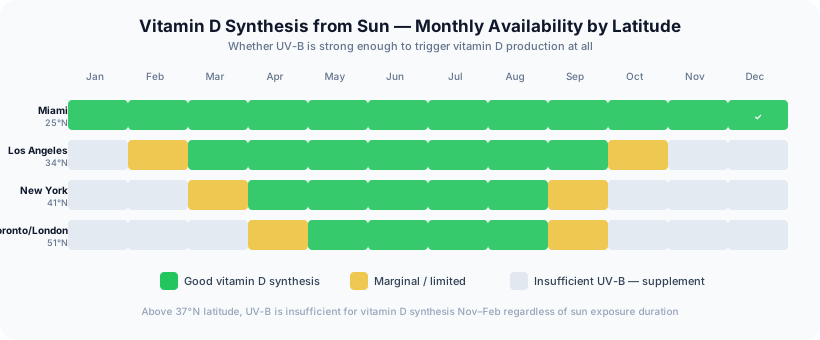
The Season Effect in Numbers
At 43° north (Toronto, approximate):
- June midday (UV 9): 15 minutes of arm/leg exposure provides robust vitamin D synthesis for Type II skin
- September midday (UV 6): 20–25 minutes needed
- November midday (UV 2): Essentially zero vitamin D production — UV-B insufficient regardless of exposure duration
- January midday (UV 1): Zero vitamin D production from sun
At 25° north (Miami):
- January midday (UV 7): 15–20 minutes of arm/leg exposure is sufficient for most skin types
The seasonal window for vitamin D synthesis at high latitudes is roughly May through September. For people who live north of 45°, this is a 5-month window at best — which is why vitamin D supplementation is widely recommended for anyone living in northern climates, and why sun exposure alone cannot maintain adequate vitamin D year-round without supplements.
Glass Blocks What You Need
Vitamin D synthesis requires UV-B. UV-B is blocked almost entirely by glass.
Sitting by a sunny window feels warm because UV-A passes through glass freely — but UV-A doesn't trigger vitamin D production. It does cause UV-A-related skin damage (collagen breakdown, photoaging). So a sunny office or car window gives you the harmful part of solar UV without the vitamin D benefit.
This is why driving a car in summer, even with the sun streaming in, doesn't contribute to your vitamin D levels.
The Sunscreen Question
The concern: if sunscreen blocks UV-B, doesn't it also block vitamin D synthesis?
Theoretically, yes. Practically, population studies consistently show that regular sunscreen users don't have lower vitamin D levels than non-users.
A few reasons this appears to be true in practice:
- Perfect sunscreen application is rare — gaps and underapplication mean some UV-B reaches skin
- Most sunscreen users still have some unprotected skin exposure during daily life
- Sunscreen wears off over time and is rarely reapplied with perfect timing
The epidemiological picture suggests that the theoretical block is significantly reduced in real-world use. If you're a consistent, thorough sunscreen user and are concerned about vitamin D, supplementation is the reliable answer — not reducing sunscreen.
How Much Vitamin D is Enough?
The science here is clear and consistently agreed upon:
Deficiency: Blood 25(OH)D levels below 20 ng/mL (50 nmol/L) Insufficiency: 20–30 ng/mL (50–75 nmol/L) Adequate: 30–50 ng/mL (75–125 nmol/L) Optimal (for most adults): 40–60 ng/mL (100–150 nmol/L)
Estimates vary, but 40–50% of adults globally are vitamin D deficient or insufficient, including a substantial percentage in sunny countries where diet is low in vitamin D-rich foods. The Endocrine Society's clinical practice guidelines define these thresholds and provide treatment recommendations for deficiency.
Groups at highest risk of deficiency:
- Older adults (skin produces less vitamin D per UV dose with age)
- People with darker skin (need more UV exposure per unit of vitamin D production)
- People who live above 37° north
- People who spend most of their time indoors
- Anyone who consistently covers all skin outdoors
Vitamin D from Food and Supplements
The most reliable way to maintain adequate vitamin D in northern climates or for people with high melanin content is through diet and supplementation — not sun exposure.
Dietary sources of vitamin D:
- Fatty fish (salmon, mackerel, sardines): 400–600 IU per 3oz serving
- Fortified milk: 100–120 IU per cup
- Egg yolks: 40–50 IU each
- Fortified cereals: 40–100 IU per serving
Most adults need 600–800 IU per day (higher for those over 70 or deficient), and diet alone rarely provides that much without oily fish being a significant dietary staple.
Vitamin D3 supplements (cholecalciferol — the same form your skin produces) are widely available, inexpensive, and effective. A dose of 1,000–2,000 IU/day is the range recommended for maintenance by many health authorities; higher doses may be appropriate for deficiency but should be confirmed by blood test. Vitamin D is fat-soluble, so take it with a meal containing fat.
The practical advice: if you live above 40° north, supplement vitamin D from October through April at minimum. Don't try to compensate by increasing sun exposure — you can't produce meaningful vitamin D from November to February regardless of how long you're outside.
Why This Matters for UV Protection
The vitamin D concern is often used to rationalize reducing sun protection. "I need the sun for vitamin D" becomes a reason to skip sunscreen, stay out during peak UV hours, or avoid seeking shade.
This reasoning breaks down when you look at the biology:
-
The vitamin D window is short — 10–30 minutes of arm/leg exposure, depending on skin type. After that, you're accumulating damage with no additional vitamin D benefit.
-
The window is in the morning or late afternoon — UV is sufficient for vitamin D synthesis but significantly lower than midday peak. A 20-minute walk before 10 AM or after 3 PM provides vitamin D opportunity without peak UV exposure.
-
Supplements are more reliable — They provide a consistent, known dose regardless of weather, season, latitude, or skin type. If maintaining adequate vitamin D is the goal, supplementation is simply more dependable than sun exposure, especially in northern climates.
The balance isn't "protect your skin OR get vitamin D." It's brief, moderate exposure in the right conditions for vitamin D, then protection for the rest of your outdoor time — plus supplementation to fill any seasonal gaps.
Using SunUp to Find Your Vitamin D Window
SunUp shows your current UV index and your personalized safe-time calculation based on your skin type. A practical approach:
- Open SunUp in the morning or late afternoon (8–10 AM or 3–5 PM in summer)
- Check the UV index — you need UV 3 or higher for meaningful vitamin D synthesis
- For UV 3–5: 15–25 minutes of arm/leg exposure (adjust for your skin type using the chart above)
- Apply sunscreen for the rest of your outdoor activity
This gives you a deliberate vitamin D window without extending unprotected exposure into peak UV hours. If UV is below 3 (common in winter above 37° north), no amount of sun exposure that day will produce meaningful vitamin D — that's a supplement day.
FAQ
How long do I need to be in the sun for vitamin D?
For most people (Fitzpatrick Types II–III) in summer at UV index 5–7: 10–20 minutes of arm and leg exposure is sufficient for meaningful vitamin D synthesis. Darker skin types (Type V–VI) may need 30–60 minutes for equivalent production. After this window, extended exposure doesn't produce more vitamin D — it only accumulates UV damage.
Does sunscreen prevent vitamin D production?
Theoretically yes — sunscreen blocks UV-B, which is needed for vitamin D synthesis. In practice, population studies don't show lower vitamin D levels in regular sunscreen users, likely because sunscreen is rarely applied perfectly. If vitamin D is a concern, supplements are a more reliable solution than reducing sun protection.
Can I get vitamin D through a window?
No. Glass blocks UV-B almost entirely. Sitting near a sunny window provides no meaningful vitamin D synthesis. UV-A passes through glass freely, contributing to photoaging and some UV damage — but not to vitamin D production.
Is vitamin D from the sun better than supplements?
The form your skin produces (D3/cholecalciferol) is identical to the form in most supplements. The process differs but the end result in blood levels is the same. Supplements are more predictable, more reliable in northern climates and winter months, and don't require UV exposure. Most research suggests D3 supplements effectively raise blood vitamin D levels comparably to sun exposure.
What time of day is best for vitamin D from sun?
UV-B (needed for vitamin D) is present whenever UV index is 3 or higher. In summer at mid-latitudes, this is roughly 9 AM–4 PM. For minimizing UV damage while getting vitamin D, morning (9–10 AM) or late afternoon (3–4 PM) provides sufficient UV-B for vitamin D production at lower total UV intensity than peak midday. This is the optimal window if sun-based vitamin D is your goal.
How do I know if I'm vitamin D deficient?
A 25(OH)D blood test is the standard measurement. Ask your doctor to include it in your routine annual bloodwork — it's inexpensive and tells you exactly where your levels are. Many people are surprised to find they're deficient even living in sunny climates, particularly if they work indoors, use consistent sun protection, or have darker skin.
Apply This Knowledge With SunUp
Get real-time UV data personalized for your skin type, location, and activity.
Download Free — iOS