
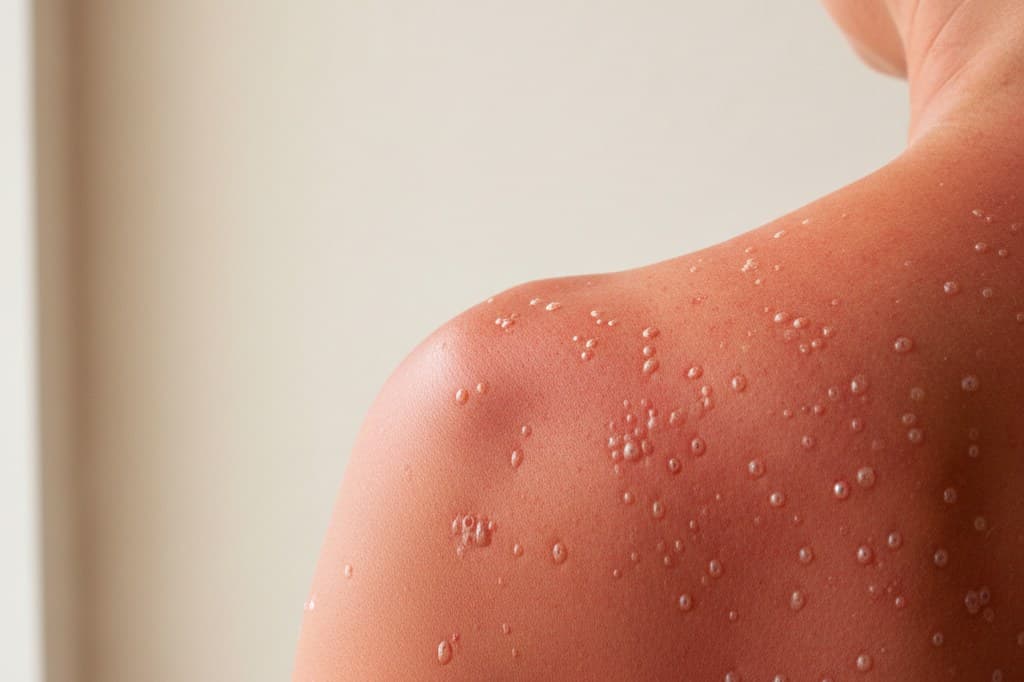

Blisters on a sunburn mean you didn't just get too much sun. You got a second-degree sunburn.
That's not hyperbole. The blisters are your body throwing up an emergency barrier over damaged skin, and the burn comes from the same UV radiation that causes skin cancer. A Nurses' Health Study II analysis published in Cancer Epidemiology, Biomarkers & Prevention (2014) found that women with five or more blistering sunburns between ages 15 and 20 had an 80% higher risk of melanoma and a 68% higher risk of basal cell and squamous cell carcinoma (study).
Quick Answer: Sunburn blisters are a second-degree burn. Leave them alone — don't pop, pick, or peel. Cool the skin with damp compresses, apply fragrance-free aloe, consider ibuprofen for pain and swelling, drink extra water, and stay out of the sun until they heal, which can take one to three weeks. See a doctor for large blisters, blisters on your face, hands, or genitals, signs of infection, or fever, chills, confusion, or nausea.
The good news: most blistering sunburns heal at home with the right care. The better news: these burns are almost entirely preventable if you know your own burn time before you go outside, and that's the gap SunUp was built to close for sunburn blisters and every milder burn before them.
What Sunburn Blisters Actually Are
Sunburn blisters are a sign of a second-degree burn, according to the American Academy of Dermatology, and they are a different injury from the friction blister you get from new shoes. Shoe blisters are surface-level fluid pockets caused by rubbing.
With sunburn blisters, UV radiation has damaged skin cells deeper down and set off an inflammatory reaction. Blood vessels dilate. Fluid leaks in. The top layer of skin lifts and fills with clear, slightly yellow fluid. The blister roof is a protective cover. What's underneath is busy regrowing.
Here's what makes them different from a regular sunburn:
| Sign | First-Degree Sunburn | Second-Degree (Blistering) |
|---|---|---|
| Skin appearance | Red, dry, no blisters | Red, swollen, fluid-filled bumps |
| Pain level | Tender to touch, stings | Sharper pain, can throb at rest |
| Healing time | Days | One to three weeks for second-degree burns |
| Peeling | Yes, typical | Yes, plus blister fluid drainage |
| Scarring risk | Low | Higher, especially if popped or infected |
| Whole-body symptoms | Rare | Possible: fever, chills, nausea |
Blisters can show up hours after the burn. They often catch people off guard — you think you're dealing with a bad sunburn, go to bed, and wake up with fluid-filled bumps on your shoulders, back, or chest.
Why Prevention Is Worth Ten Times the Cure
The UV damage behind sunburn blisters happens hours before you feel anything, which is why prevention beats treatment every time. You're probably reading this with blisters already, so bear with me for one section.
That's the trap. UV radiation is invisible and painless in the moment. You don't feel yourself burning. By the time your skin turns pink, the damage is done. By the time blisters form, you're well past "oops."
The single best thing you can do — for yourself, for your kids, for anyone you care about — is check your personal burn time before you go outside. Not a generic number from a website. Your actual burn window, today, where you are, based on:
- The current UV index at your location
- Your skin type (Fitzpatrick I through VI) and your age
- Whether you're near water, sand, or snow (reflection adds UV)
- The time of day
Burn time is personal. Two people on the same beach towel can have very different numbers, and a child's is not the same as a parent's. SunUp treats sunburn blisters as a timing problem: get each person's number right and the burn never gets that far.
The SunUp app calculates this in seconds. You set the skin type for yourself and each family member, and SunUp gives everyone their own burn-time estimate for today's UV. It shows an 8-day UV forecast so you can plan the beach day or the soccer tournament, and you can check UV remotely for family in another city. That's the whole reason SunUp exists: sunburn blisters mostly happen to people who didn't know how strong the UV was that day.
And if you're heading out for a full day, a wide-brimmed UPF 50+ sun hat from GearTOP keeps the sun off your face, ears, and neck — spots where people often under-apply sunscreen. Combine that with broad-spectrum SPF 30+ sunscreen, reapplied every two hours and right after swimming or sweating, as the American Academy of Dermatology advises.
How to Treat Sunburn Blisters at Home
Most sunburn blisters can be treated at home by getting out of the sun, cooling the skin, protecting the blisters, and drinking extra fluids. Here's the step-by-step:
1. Get out of the sun. Now.
Not "in a minute." Not "after I finish my drink." Go indoors. More UV on burned skin makes the burn worse.
2. Cool the skin — but not with ice.
Run a clean washcloth under cool tap water and lay it on the blistered area for several minutes at a time. Repeat a few times a day. A cool bath helps for larger areas. Don't put ice directly on the burn — it can damage already-injured skin.
3. Consider ibuprofen.
The AAD suggests aspirin or ibuprofen to help reduce swelling and discomfort. Sunburn is an inflammatory injury, so an anti-inflammatory does more than mask pain. Follow the label dosage and check with a pharmacist if you have other health conditions.
4. Moisturize with the right products.
Fragrance-free aloe vera gel — chilled in the fridge — feels great. Apply gently, don't rub. The AAD recommends keeping blisters clean and using petroleum jelly to protect them while they heal. Avoid alcohol-based products, numbing sprays ending in "-caine" like benzocaine (they can irritate skin or trigger allergic reactions), and anything with fragrance.
5. Leave. The. Blisters. Alone.
This is the rule that decides whether you heal cleanly or end up with scars and an infection. The AAD says blisters form to help your skin heal and protect you from infection. Popping one is like tearing off a bandage over an open wound — and then inviting bacteria in.
If a blister breaks on its own:
- Wash your hands first
- Gently clean the area with cool water and mild soap
- Don't scrub
- Apply an over-the-counter antibiotic ointment
- Cover loosely with a nonstick gauze bandage (not cotton balls — fibers stick to wounds)
- Change the bandage daily
6. Drink more water than you think you need.
A sunburn draws fluid toward the skin and away from the rest of your body. Blistering burns draw more. Dehydration slows healing and makes you feel worse, so drink steadily through the day, not just when you're thirsty.
What Not to Do With Sunburn Blisters
The mistakes that make sunburn blisters worse are popping them, trapping heat, and going back into the sun too soon. Avoid these:
- Don't put butter, oil, or coconut oil on the burn. They hold heat in the skin.
- Don't apply ice directly. It can injure already-damaged skin.
- Don't slather heavy ointments on hot, fresh burns. Let the skin cool first, then use petroleum jelly to protect intact blisters.
- Don't peel the skin after blisters drain. Let it come off on its own.
- Don't go back in the sun with healing blisters. The new skin underneath is thin and burns easily. Keep it covered.
When to See a Doctor for Sunburn Blisters
Mayo Clinic advises seeing a doctor for sunburn when blisters are large or appear in sensitive areas, or when whole-body symptoms show up. Specifically, get checked if you have:
- Large blisters
- Blisters on your face, hands, or genitals
- Severe swelling of the burned area
- Signs of infection, such as pus in the blisters or red streaks spreading out from them
- Worsening pain, headache, confusion, nausea, fever, or chills
- A burn that keeps getting worse despite home care
Mayo Clinic says to seek immediate medical care for a sunburn with a fever over 103 F (39.4 C) with vomiting. And if you're caring for a baby or young child with blistering burns, get them seen sooner — kids dehydrate faster.
For severe blistering or dehydration, Cleveland Clinic notes a provider may give rehydrating fluids. A doctor can also prescribe treatment you can't buy over the counter, including antibiotics if a blister gets infected.
How to Stop Sunburn Blisters From Happening Again
Preventing sunburn blisters comes down to knowing the UV before you go out and putting a barrier between your skin and the sun. This part is simple:
-
Check your personal burn time before going outside. The simplest SunUp habit against sunburn blisters is a five-second check before you leave: SunUp gives each person in your family an estimate based on their skin type and today's UV where they are — plus an 8-day forecast so you can plan around the worst days.
-
Wear broad-spectrum SPF 30+ sunscreen. Apply it about 15 minutes before you go out, reapply every two hours, and right after swimming or sweating. Use roughly a shot glass worth to cover your whole body.
-
Cover the burn-prone zones. A wide-brimmed hat from GearTOP shades your face, ears, and neck. UPF-rated clothing over shoulders and back adds protection that doesn't wash off.
-
Plan around peak hours. The Skin Cancer Foundation calls 10 AM to 4 PM the peak hours of sun intensity. If you have to be out in that window, shade, clothing, and sunscreen become non-negotiable.
-
Don't trust "I don't feel that hot." This is the mistake that sends people home with blistering burns. You feel heat from infrared, not UV. A cool breeze on a sunny day feels comfortable while UV does its damage.
The bottom line: sunburn blisters are a real injury, but they almost never need to happen. Your burn time is knowable. The UV index is checkable. SunUp shows you both before sunburn blisters become your problem, and protection — sunscreen, clothing, shade, a good hat — does the rest.
Next time, check your burn time in SunUp before you check the weather. That five seconds can save you a week of pain.
Last updated October 22, 2026. This article is informational and not medical advice — see a doctor or pharmacist for a severe burn.
Frequently Asked Questions
What are sunburn blisters?
Sunburn blisters are fluid-filled bumps that form on badly sunburned skin. The American Academy of Dermatology says blistering skin means you have a second-degree sunburn, which reaches deeper than an ordinary red burn. The fluid and the blister roof act as a natural cover over the damaged skin while new skin grows underneath, which is why the blisters should be left alone.
Should I pop sunburn blisters?
No. Do not pop sunburn blisters. The American Academy of Dermatology explains that blisters form to help your skin heal and to protect you from infection. Popping them opens a wound and raises the risk of infection and scarring. If a blister breaks on its own, wash it gently with mild soap and cool water, apply antibiotic ointment, and cover it loosely with a nonstick bandage.
How long do sunburn blisters take to heal?
Cleveland Clinic says second-degree burns, which include blistering sunburns, generally take one to three weeks to heal, and a severe sunburn can take a few weeks. Leaving the blisters intact and keeping them clean helps them heal faster. The new skin may stay pink or discolored for weeks afterward. See a doctor if blisters get worse instead of better.
Do sunburn blisters mean sun poisoning?
Not always. Sunburn blisters show a second-degree burn, while sun poisoning is the informal name for a severe sunburn that also causes whole-body symptoms such as fever, chills, nausea, headache, or confusion. Blisters alone can usually be treated at home. Blisters together with any of those symptoms mean you should get medical care, especially for children and older adults.
Can sunburn blisters cause scarring?
Sunburn blisters that are left intact and heal on their own rarely scar. Popping, picking, or peeling them, or letting them get infected, raises the risk of a permanent scar. Even unbroken blisters can leave darker or lighter patches of skin that take months to fade, so keep the healing skin out of the sun and covered while it recovers.
When should I see a doctor for sunburn blisters?
Mayo Clinic advises seeing a doctor for sunburn if you develop large blisters, blisters on the face, hands, or genitals, severe swelling, signs of infection such as pus or red streaks, or worsening pain, headache, confusion, nausea, fever, or chills. Seek immediate care for a fever over 103 F (39.4 C) with vomiting. Babies and young children with blisters should be checked promptly.
Can sunburn blisters show up a day later?
Yes. Sunburn blisters often appear several hours after sun exposure and can show up the next day. The UV damage happens while you are outside, but the inflammation that forms the blisters builds over the following hours. If you came home with a bad burn, check the skin again the next morning and start home treatment as soon as blisters appear.
Can I put sunscreen on sunburn blisters?
Avoid putting sunscreen on blistered, broken, or peeling skin, because it can sting and irritate the damaged area. Protect the blisters from more sun instead. Stay indoors or in shade, and cover the area with loose, tightly woven clothing until it heals. Keep using broad-spectrum SPF 30+ sunscreen on the rest of your exposed skin when you go outside.
What is the best thing to put on sunburn blisters?
Cool, damp compresses and fragrance-free aloe vera are the gentlest first steps for sunburn blisters. The American Academy of Dermatology suggests keeping blisters clean and applying petroleum jelly to protect them while they heal. Avoid numbing products ending in -caine, such as benzocaine, which the AAD says can irritate skin or cause an allergic reaction, and skip butter, oils, and alcohol-based products.
How do I sleep with sunburn blisters?
To sleep with sunburn blisters, wear loose, soft cotton clothing and use clean sheets, because blisters can leak overnight. Cool the skin with a damp cloth before bed, and consider ibuprofen for pain and swelling if it is safe for you. If the blisters are on your back, sleep on your side or stomach so you do not press on them.
Apply This Knowledge With SunUp
Get real-time UV data personalized for your skin type, location, and activity.
Download Free — iOS