
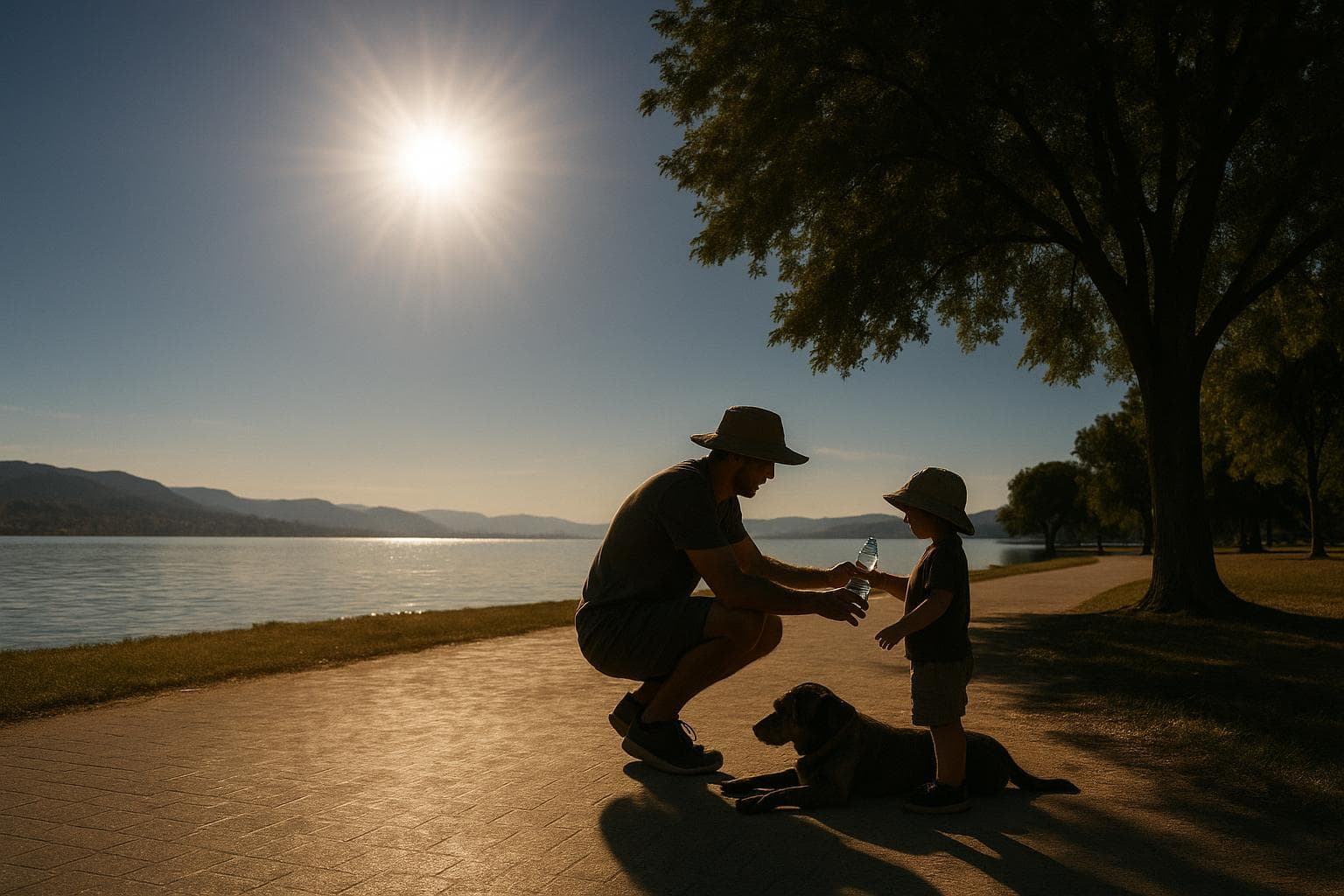

I checked SunUp at 12:49 PM today from Oakville. UV index: 9.5 — Very High Risk. Estimated safe time: about 30 minutes. Peak at 1 PM. And to be clear about what that 30 minutes is: it's my number — calculated for my age, my sex, my skin type, my exact location, and whether I'm getting reflected UV off water. Your number will be different. Your kids' numbers will be different again. And that's before you factor in the heat itself: Environment Canada has southern Ontario under a heat warning with highs near 37°C and humidex values pushing 45. Today is forecast to be the peak of this event.
This is the kind of day where two separate dangers — extreme heat and very high UV — stack on top of each other. They get treated as one thing ("it's brutal out"), but your body handles them differently, and protecting against one doesn't protect against the other.
Quick Answer: During a heat wave with UV 9+, midday safe-sun time shrinks dramatically — for my profile it's about 30 minutes even with sunscreen and a hat, and your number depends on your age, skin type, and location (check yours in the app). Plan activity before 10 AM or after 4 PM, drink water before you feel thirsty, never leave kids or pets in vehicles, and know the signs of heat exhaustion: headache, nausea, dizziness, dark urine.
What's actually happening this week
Environment Canada's heat warning for Toronto, Hamilton, and Halton–Peel calls for maximum temperatures of 30 to 37°C, overnight lows of 20 to 24°C — which means little recovery while you sleep — and humidex values of 38 to 45. The event is expected to break Wednesday or Thursday evening. The same hot, humid air mass can also drag air quality toward the high-risk range, so people with asthma or heart conditions get a third factor to manage.
For context: a heat warning in southern Ontario triggers when forecasts show 31°C days with 20°C nights for two consecutive days, or a humidex of 40 or more. We're well past both thresholds.
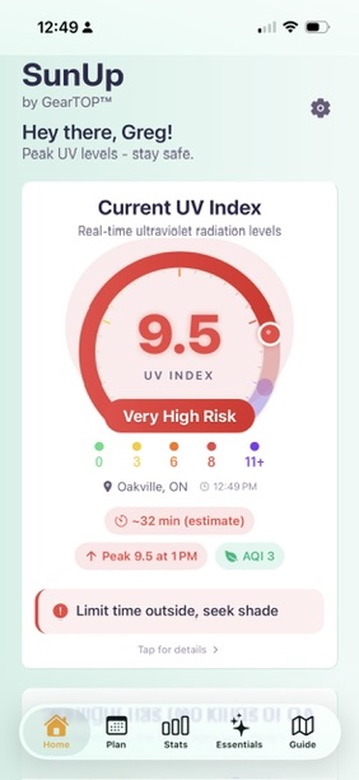
SunUp at 12:49 PM today: UV 9.5, peak at 1 PM, and a ~32 minute safe-exposure estimate.
The number the weather report skips: UV 9.5
Here's the part most heat coverage misses: temperature and UV are completely independent. The 37°C reading comes from the air mass; the 9.5 UV reading comes from the sun's angle, the season, and a cloudless sky. You can't feel UV, and on a scorching day you're usually wearing less, staying out longer, and heading toward water — which reflects UV back up at you.
At UV 8–10 ("Very High" on the WHO scale), unprotected fair skin starts burning in roughly 15 minutes. That's why the app's guidance today is blunt: limit time outside, seek shade.
New in SunUp: one sun, two kinds of UV
We just shipped the feature I've wanted since we launched: a real-time UVA/UVB split. Because "UV index" is actually a blend of two different kinds of radiation doing two different kinds of damage.
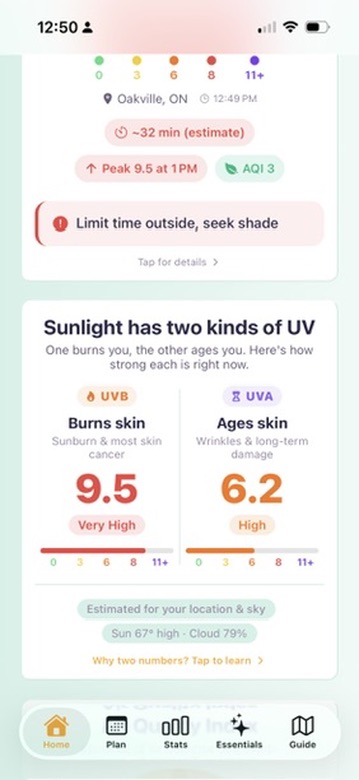
Today's split: UVB 9.5 (burns skin — sunburn and most skin cancer) vs UVA 6.2 (ages skin — wrinkles and long-term damage).
- UVB (today: 9.5 — Very High) is the burner. It damages the outer skin layer and is responsible for sunburn and most skin cancers, per the Skin Cancer Foundation.
- UVA (today: 6.2 — High) is the ager. It penetrates deeper, drives wrinkles and long-term damage, and — unlike UVB — passes through window glass. About 95% of the UV that reaches Earth's surface is UVA.
Broad-spectrum sunscreen exists precisely because SPF alone only describes UVB protection. On a day like today, both numbers are high enough to matter.
The 30-minute reality check
I planned a 2-hour midday hike in the app this morning to see what it would say. The answer: don't.
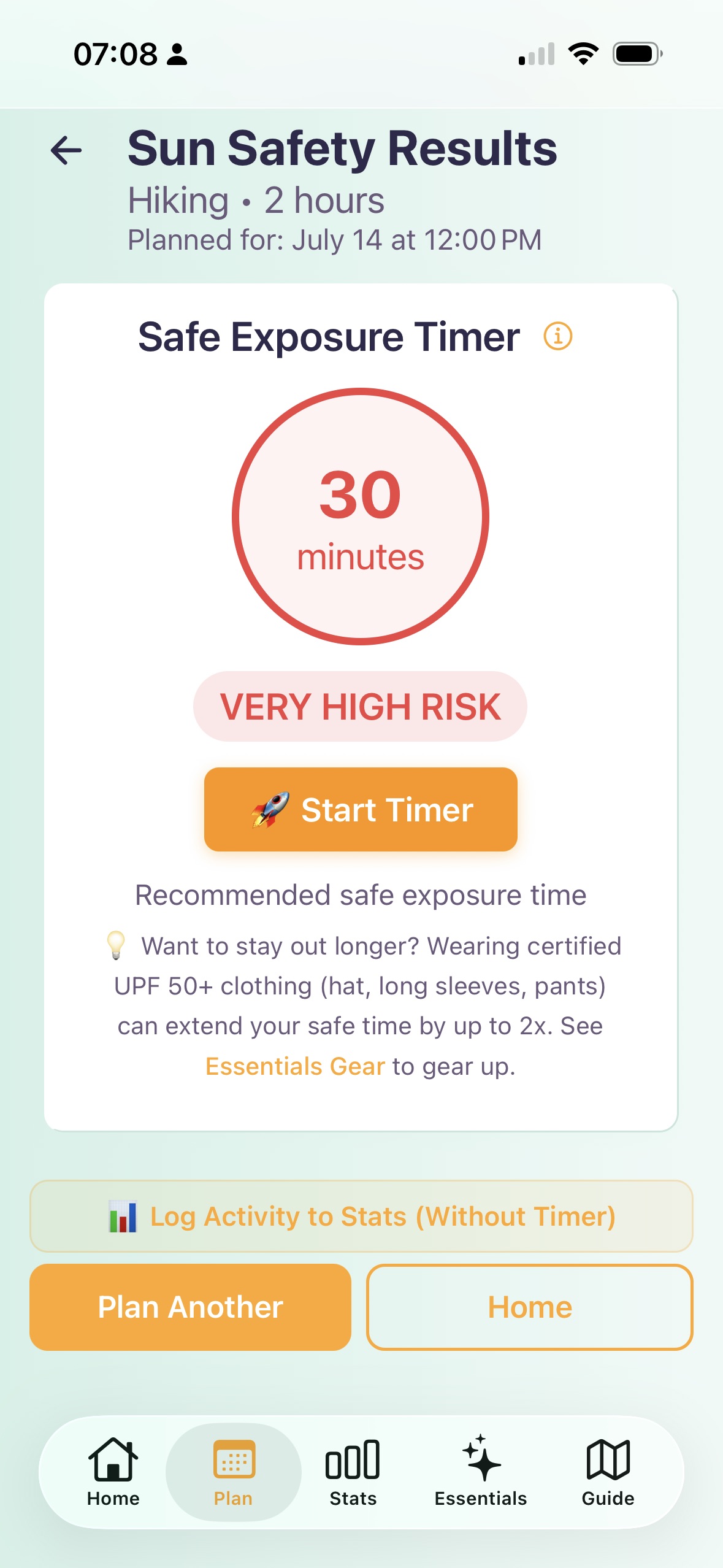
A 2-hour hike planned for noon came back with a 30-minute safe exposure timer — Very High Risk.
Thirty minutes. That's the recommended safe exposure for me at today's UV — my age, my skin tone, my location, protection assumed. This is the part most sun advice gets wrong: there is no universal safe-sun number. Everyone's skin is different. A fair-skinned kid might have half my window; my parents' skin reacts differently than mine; someone with a deeper complexion gets longer. Add reflection off a lake or pool and any number shrinks again. That's exactly why this is a check-it-every-day habit rather than a rule you memorize once. Certified UPF 50+ clothing (hat, long sleeves, pants) can roughly double that window, which is the difference between "quick errand" and "actual walk." But there is no combination of gear that makes a 2-hour noon hike a good idea today.
The honest move is rescheduling: this morning's UV at 8 AM was under 3. Tomorrow's peak drops to 7.7 — better, still High, still worth timing around.
And you don't have to be standing there to check. The part of the app I use most in weeks like this is checking for the people I care about who are somewhere else: set up a profile with your kid's skin type and their camp's location, or your mom's settings in the city she's visiting, and you can see their safe-sun number for their sky — right now, or for a specific time up to 8 days ahead. If your mom is away and she can't check for herself, spend the minute and check for her. It's peace of mind that costs nothing.
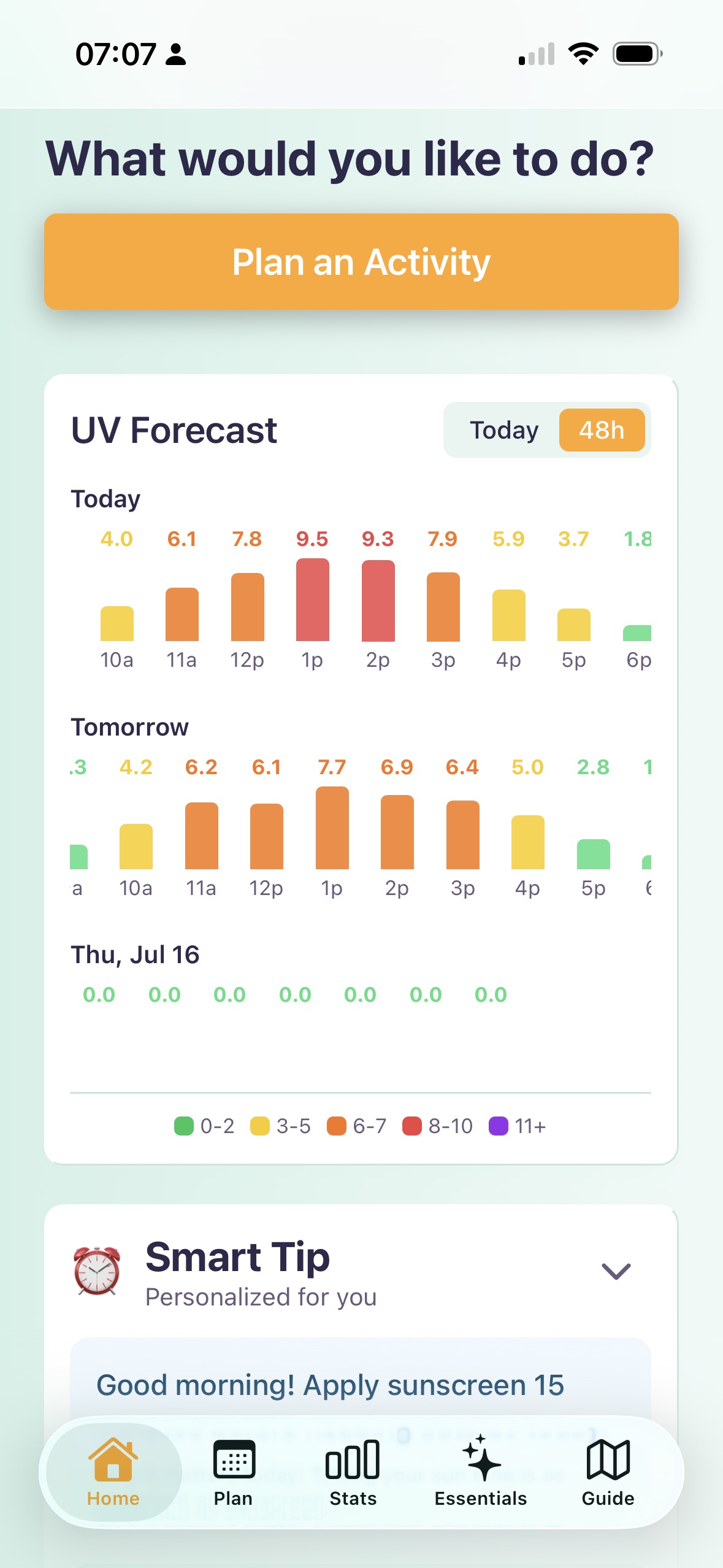
The 48-hour forecast: today peaks at 9.5 (1 PM), tomorrow eases to 7.7. The safe windows are before 10 AM and after 5 PM.
Heat safety: the checklist that actually matters
The app's recommendations for today, plus what Environment Canada's warning adds for the heat side:
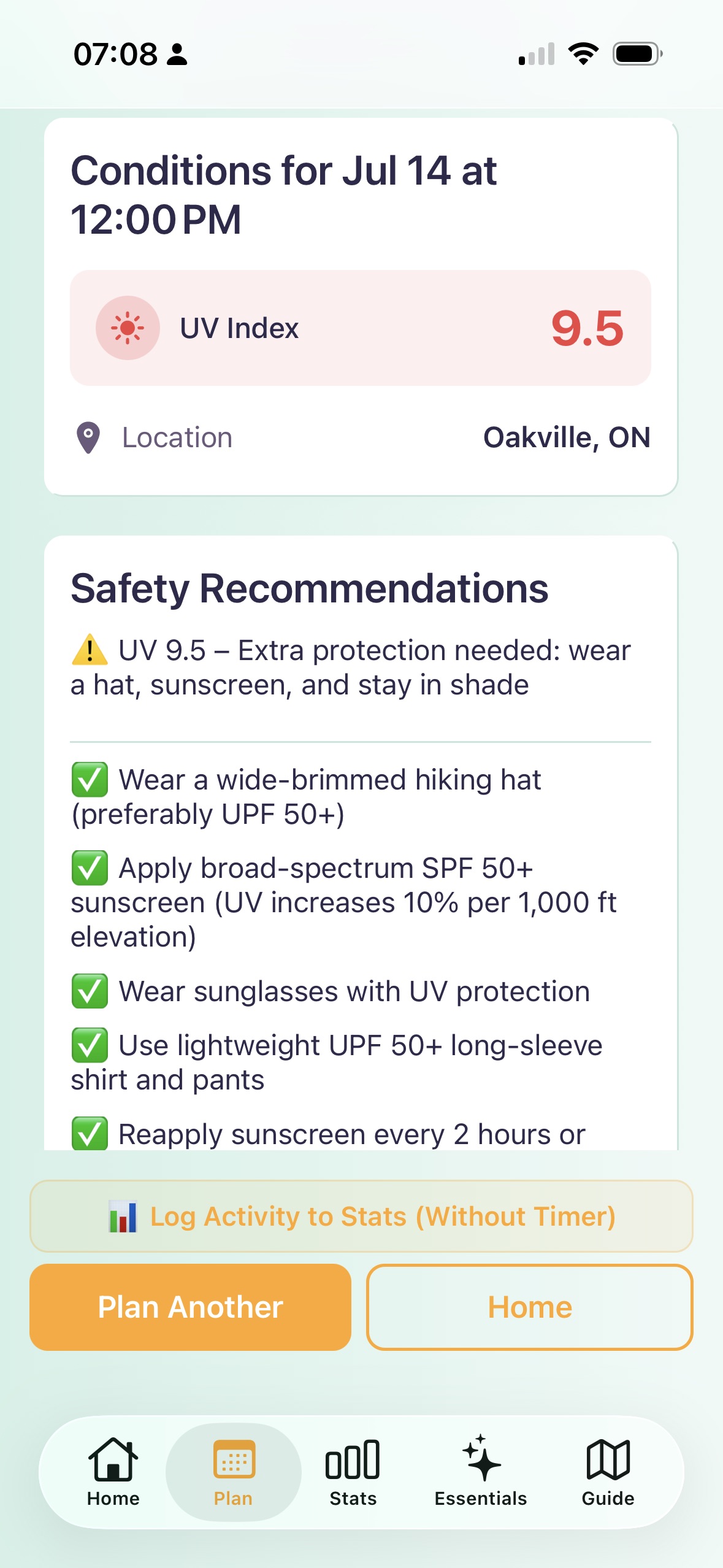
SunUp's checklist for UV 9.5: UPF 50+ wide-brim hat, broad-spectrum SPF 50+, UV sunglasses, lightweight long sleeves, reapply every 2 hours.
For the sun:
- Wide-brimmed hat, preferably UPF 50+ — it shades face, ears, and neck, the most common burn sites
- Broad-spectrum SPF 50+, reapplied every 2 hours (more often if you're sweating this much)
- Sunglasses with UV protection; lightweight long sleeves beat bare skin
For the heat:
- Drink water often and before you feel thirsty. Dark urine means you're already behind.
- Stay out of the 11 AM – 4 PM window. Morning and evening are your friends this week.
- Close blinds during the day; if your home is hot, use a library, mall, or cooling centre.
- Check on older adults and anyone living alone — more than once a day.
Kids and pets — the non-negotiables:
- Never leave a child or pet in a parked vehicle, even for a minute. Interior temperatures turn deadly fast, and it's the single most preventable heat tragedy every summer.
- Kids overheat and dehydrate faster than adults. Shade, water, hats, and shorter outdoor sessions.
- Dogs: pavement at 37°C air temperature can burn paw pads — test it with the back of your hand. Walk early, walk late, and keep water available. Cats and dogs cool by panting; they can't sweat their way through humidex 45 any better than we can.
Know the warning signs
Heat exhaustion — stop, shade, water: headache, nausea, dizziness, intense thirst, dark urine, unusual fatigue.
Heat stroke — call 911, this is a medical emergency: red and hot skin, dizziness, nausea, confusion, or a change in consciousness. While you wait for help, move the person somewhere cool, strip extra layers, and apply cold water or ice packs.
The gap between those two lists is minutes, not hours, when someone keeps exerting themselves in this weather. Watch each other.
Frequently Asked Questions
What are the symptoms of heat stroke?
Heat stroke signs include red and hot skin, dizziness, nausea, confusion, and a change in consciousness. It is a medical emergency — call 911 immediately. While waiting for help, move the person somewhere cool, remove extra clothing, and apply cold water or ice packs around the body.
What is the difference between heat exhaustion and heat stroke?
Heat exhaustion comes first: headache, nausea, dizziness, intense thirst, dark urine, and unusual fatigue. Stop activity, get to shade, and drink water. Heat stroke is the dangerous escalation — hot red skin, confusion, or fainting — and requires a 911 call, not just rest and fluids.
What is the difference between UVA and UVB?
UVB is the shorter wavelength that burns the outer skin layer and drives most skin cancers. UVA penetrates deeper, causing wrinkles, premature aging, and long-term damage — and it passes through window glass. Both matter, which is why SunUp now shows a separate real-time index for each.
Does a heat wave increase the UV index?
Not directly — temperature and UV are independent. A 20°C June day can have higher UV than a 35°C August day. But heat waves usually come with cloudless skies and long outdoor hours near water, so extreme heat and very high UV often arrive together, exactly like this week in Ontario.
What does a humidex of 45 mean?
Humidex combines temperature and humidity into what the heat actually feels like to your body. Environment Canada issues heat warnings for southern Ontario when humidex reaches 40 or more for two consecutive days. At 45, sweat stops evaporating efficiently, so your body loses its main cooling mechanism.
How much water should I drink during a heat wave?
Drink water frequently and before you feel thirsty — thirst lags behind dehydration. Watch your urine: dark yellow means you're behind on fluids. Go easy on alcohol and heavy caffeine during peak heat, and remember kids and pets dehydrate faster than adults do.
What UV index is considered dangerous?
UV 3–5 is moderate, 6–7 high, 8–10 very high, and 11+ extreme. At today's 9.5, unprotected fair skin can begin burning in roughly 15 minutes, and even with sunscreen and a hat the safe midday window shrinks to around 30 minutes for many adults — but the exact number is personal, not universal.
Is the 30-minute safe sun time the same for everyone?
No — safe sun time is a personal, variable number. It depends on your age, sex, skin type and complexion, your exact location's UV, and reflection from water, sand, or concrete. Kids usually have a shorter window than adults, and every skin tone is different. SunUp calculates it per person, per location, per day — and lets you check it remotely for family members using their own profiles, up to 8 days ahead.
The bottom line
This heat event breaks Wednesday or Thursday. Until then: my midday ceiling is 30 minutes — check yours, and check your kids' — mornings and evenings are for anything longer, water goes in before thirst shows up, and nobody — kid, dog, or grandparent — gets left to manage the heat alone.
SunUp is free on the App Store — real-time UV with the new UVA/UVB split, a safe-exposure timer personalized to each family member's age, skin type, and location, remote checks for loved ones wherever they are, and a forecast up to 8 days ahead so you can plan around days exactly like this one. Stay cool, stay safe.
Apply This Knowledge With SunUp
Get real-time UV data personalized for your skin type, location, and activity.
Download Free — iOS